Exploring oxidation, the gut-brain connection, cellular signaling, and the possibility that changes in one biological system may influence many others.
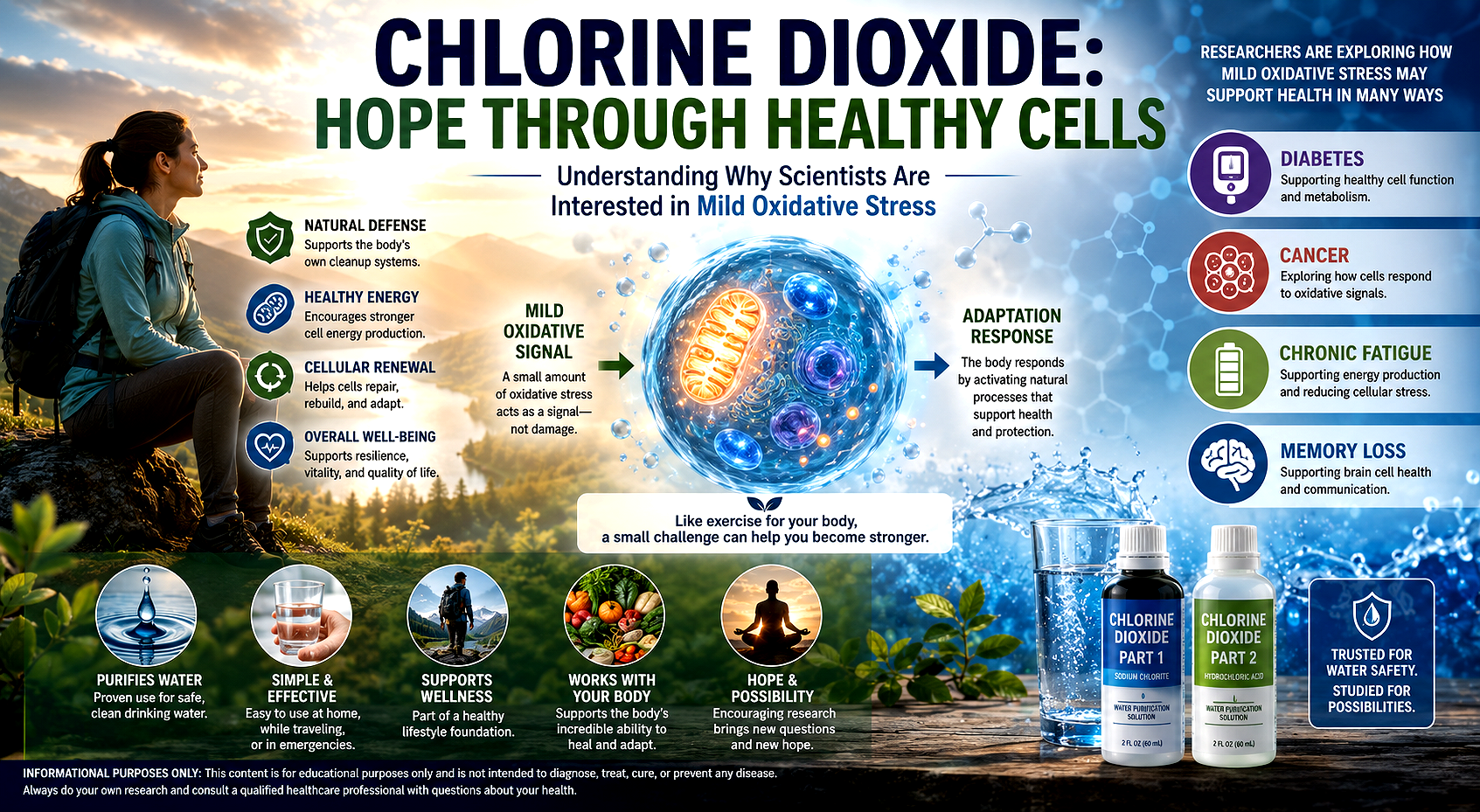
What if a seemingly small change in one part of the body could influence something happening somewhere else? Not necessarily through a direct intervention at the site of a symptom, but through a sequence of biological responses that eventually reaches a completely different system.
This is an idea familiar to practitioners of subtle energy therapies, holistic wellness, and other whole-person approaches.
A practitioner might focus on one area while a client reports changes somewhere else. The explanation offered may involve energetic balance, the release of tension, nervous system regulation, or the body’s capacity to reorganize itself.
Chlorine dioxide introduces an interesting parallel. Its chemistry is very different from subtle energy therapy. Chlorine dioxide is a reactive oxidizing compound, best known for its antimicrobial properties in controlled disinfection applications.
Yet both subjects invite a broader question:
Can a change at one point in a complex system produce consequences far beyond where it began?
The answer, in biology, is certainly yes.
The more difficult question is whether a particular intervention produces beneficial changes, harmful changes, or a mixture of both. And that’s where the investigation becomes interesting.
The Body Is Not a Collection of Separate Parts
We often talk about the human body as though its systems operate independently.
- The digestive system handles food.
- The immune system responds to threats.
- The nervous system transmits information.
- The endocrine system regulates hormones.
- The circulatory system delivers nutrients and oxygen.
But none of these systems operates in isolation. They exchange information continuously.
- A change in sleep can influence appetite.
- An intestinal infection can affect mood and energy.
- Chronic stress can alter digestion.
- Inflammation in one area can produce effects elsewhere.
- And changes in the gut microbiome may influence immune and metabolic signaling.
This interconnectedness is one reason the gut has attracted so much scientific attention.
It is also one reason holistic practitioners have long been interested in the possibility that addressing one area of the body might influence symptoms appearing elsewhere.
The Gut as a Communication Center
The gastrointestinal tract is much more than a passageway for food. It contains an extensive nervous system, houses large populations of microorganisms, interacts with immune cells, and participates in hormonal and metabolic signaling.
The gut communicates with the brain through several pathways, including the vagus nerve, immune messengers, microbial metabolites, and endocrine signals.
These relationships are often grouped under the term gut-brain axis. But the connections extend beyond the brain.
Gut-related processes can influence immune responses, nutrient availability, metabolism, and inflammatory signaling throughout the body.
Consider a person experiencing a gastrointestinal infection. Their symptoms may include abdominal discomfort, but they might also experience fatigue, reduced appetite, changes in sleep, and difficulty concentrating.
The problem began in one location, yet its effects are experienced throughout the body. The reverse can also happen.
When an underlying gastrointestinal condition is successfully treated, symptoms beyond the digestive tract may improve.
This is an established example of a local change influencing a wider biological system.
Where Oxidation Enters the Picture
Oxidation is frequently described as something harmful. We hear about oxidative stress, cellular damage, antioxidants, and the importance of protecting the body from excessive free radicals. But oxidation is not inherently bad.
Oxidation and reduction are fundamental chemical processes involved in metabolism, immune defense, and cellular communication.
The body uses carefully regulated oxidation-reduction reactions—often called redox reactions—to maintain normal function.
Certain reactive oxygen species even serve as signaling molecules.
At controlled concentrations and in the appropriate cellular environment, these molecules help regulate biological activity.
At excessive concentrations, however, they can damage proteins, membranes, and genetic material.
This creates an important distinction.
Biological oxidation can participate in healthy signaling, but that does not mean introducing an external oxidizing chemical will improve that signaling.
The identity of the chemical, its concentration, the tissue exposed, and the body’s ability to regulate the reaction all matter.

Chlorine Dioxide: A Different Kind of Oxidation
Chlorine dioxide is an oxidizing agent with established applications in water treatment and sanitation. Under controlled conditions, it can react with components of microorganisms and contribute to their inactivation. This is part of what makes it useful for disinfecting water.
It is also why alternative-health researchers and practitioners became interested in its broader biological possibilities.
If chlorine dioxide can affect microorganisms outside the body, might it influence biological conditions associated with microorganisms inside the body?
That question has motivated considerable discussion.
But there is a significant difference between disinfecting water and treating the human gastrointestinal tract.
The gut is not a container of contaminated water.
It is a living environment containing human tissues, protective mucus, immune cells, digestive compounds, and a complex community of microorganisms.
Some of those microorganisms are beneficial and essential to normal function.
Chlorine dioxide does not possess an established ability to distinguish harmful organisms from beneficial gut bacteria or vulnerable human tissues when ingested.
And there is no reliable clinical evidence demonstrating that consuming chlorine dioxide produces a beneficial, controlled oxidative adjustment in the gut that subsequently corrects disorders elsewhere.
Its ingestion can cause serious adverse effects.
That leaves the proposed gut-to-body mechanism as a hypothesis rather than an established therapeutic explanation.
The Ripple Effect: How Small Changes Can Become Larger Ones
Although chlorine dioxide has not been shown to produce the proposed therapeutic cascade, the broader principle of biological ripple effects is well established.
Imagine a sequence beginning with an intestinal problem. An infection or inflammatory condition disrupts normal digestion. That disturbance affects appetite, nutrient absorption, sleep, or immune signaling. The person becomes fatigued and less physically active. Reduced activity and poor sleep influence mood and stress. Stress, in turn, can affect gastrointestinal function.
A feedback loop develops.
Now imagine that the original intestinal problem is successfully addressed with an appropriate treatment.
Digestive symptoms improve. The person begins eating and sleeping more comfortably. Energy returns. Activity increases. Mood improves.
The body has not been magically reset. Rather, one improvement has influenced several connected systems.
This is the kind of cascade that may help explain why people sometimes report broad improvements after a targeted intervention.
But the critical question remains: Did the intervention actually correct the initiating problem?
Without that information, the existence of a ripple effect does not establish the effectiveness of any particular substance or therapy.
The Connection to Subtle Energy Therapy
Subtle energy therapies approach the body through a different conceptual framework. Depending on the tradition, practitioners may describe energy flow, energetic fields, meridians, chakras, resonance, or the restoration of balance.
These concepts are not interchangeable with the measurable electrochemical and physiological processes studied in conventional biology. Nor has research established that all proposed subtle energy fields exist or operate as their practitioners describe. Nevertheless, some experiences reported during these practices overlap with outcomes studied in other fields.
People may describe relaxation, reduced distress, improved sleep, changes in pain perception, or a greater sense of well-being. Supportive touch, focused attention, expectation, and relaxation can influence aspects of the nervous system and the subjective experience of symptoms.
This creates an interesting point of comparison.
A subtle energy practitioner might describe a person as becoming more balanced.
A physiologist might investigate changes in autonomic nervous system activity, muscle tension, stress responses, or pain processing.
The descriptions are different, and they should not automatically be treated as equivalent explanations. But both invite attention to how a change in one experience or system can influence others.
Could an Oxidative Event in the Gut Influence Something Upstream?
This is perhaps the most intriguing question in the entire discussion. The answer depends on what we mean by an oxidative event.
If we are talking about naturally regulated redox signaling, then yes, chemical processes in one tissue can influence signaling elsewhere.
If we are talking about successfully treating a gastrointestinal infection, then yes, correcting that problem can sometimes improve symptoms beyond the gut.
If we are talking about changes in microbial metabolites, immune signaling, or inflammation, then there are plausible biological pathways connecting intestinal activity with distant organs.
But if we are specifically proposing that ingesting chlorine dioxide creates a beneficial oxidative chain reaction that corrects distant abnormalities, that mechanism has not been demonstrated.
Why People May Report Improvements in Unexpected Places
Alternative-health practitioners sometimes describe a familiar experience. Someone begins an intervention for one concern. Later, they report that an unrelated symptom has improved.
- Perhaps their digestion seems better.
- Perhaps they are sleeping more comfortably.
- Perhaps they notice changes in energy, mood, or physical discomfort.
Such reports can be meaningful to the individuals experiencing them. But interpreting them requires care.
The person may have made several lifestyle changes at once. An underlying condition may have improved. Stress may have diminished. Sleep may have improved. Or the intervention may have had an effect that warrants investigation.
Without appropriate evidence, it is difficult to identify which explanation applies. This becomes particularly challenging when several products or therapies are introduced simultaneously.
The person may be delighted with the outcome while having no interest in separating the possible contributions. For them, feeling better may be enough. For someone attempting to understand the mechanism, the unanswered questions remain.
Both perspectives can be acknowledged without confusing personal experience with scientific confirmation.
The Difference Between a Helpful Ripple and a Harmful Cascade
Interconnected systems do not guarantee that every ripple is beneficial.
- A disturbance in the gut can also initiate harmful effects.
- An irritant may injure the gastrointestinal lining.
- Fluid loss can produce dehydration.
- Changes in electrolyte balance can affect muscles, nerves, and the cardiovascular system.
- A substance that disrupts normal microbial communities may have unintended consequences.
These are also examples of local events producing systemic effects.
This is why the phrase “a little oxidation” can be misleading. A small quantity of a reactive chemical is not necessarily equivalent to a small or beneficial biological effect. And the body’s natural redox signaling cannot be assumed to respond favorably to the introduction of an oxidizing disinfectant.
Understanding interconnectedness requires examining both the possible benefits and the possible harms.
What Might Future Research Explore?
The relationship between gut health, redox signaling, and whole-body function offers many worthwhile research questions.
Scientists can investigate how changes in the microbiome affect immune signaling.
- They can examine how intestinal inflammation influences the nervous system.
- They can study how oxidative stress affects tissue repair.
- They can explore whether treating a particular gastrointestinal disorder produces measurable improvements in distant symptoms.
Researchers could also examine claims surrounding chlorine dioxide, beginning with questions of chemical behavior, biological exposure, toxicity, and whether any proposed therapeutic effect can be demonstrated safely.
These investigations would require careful methods and meaningful safety protections.
The objective would not be to prove an existing belief. It would be to discover what actually happens.

A Different Way to Think About Healing
Perhaps the most useful connection between chlorine dioxide discussions and subtle energy therapy is not a shared mechanism. It is a shared interest in the body as an interconnected system.
A person’s health cannot always be understood by examining one symptom in isolation.
- The gut communicates with the brain.
- The immune system interacts with metabolism.
- Stress influences digestion.
- Sleep affects inflammatory responses.
- And changes in one part of the body may alter experiences elsewhere.
This is fertile territory for investigation.
But interconnectedness does not mean every proposed intervention restores balance. The body is both remarkably adaptive and vulnerable to disruption.
A useful health intervention must do more than produce a chemical reaction or coincide with a reported improvement. It must offer a favorable balance of benefit and risk.
One Change, Many Possibilities
There is something compelling about the idea that a small change can influence an entire system.
We see versions of it in biology, ecology, psychology, and everyday life.
- One restored relationship can change a person’s outlook.
- One night of restorative sleep can make the next day feel different.
- One successfully treated infection can improve symptoms that seemed unrelated.
- And one correction to an underlying physiological problem can sometimes influence several downstream effects.
It is understandable that practitioners interested in chlorine dioxide, subtle energy, and whole-person wellness would recognize a common theme. But recognizing a theme is not the same as establishing a shared mechanism.
- Chlorine dioxide’s oxidative chemistry is real.
- The gut’s communication with the rest of the body is real.
- Redox signaling is real.
- And people’s reports of unexpected improvements can be meaningful.
What remains unproven is the proposed connection between ingesting chlorine dioxide and a beneficial cascade of corrections throughout the body.
That distinction need not end the conversation. It can make the questions better.
Perhaps the most promising idea isn’t that one particular substance holds the answer to everything. It’s that understanding the connections between systems may help us ask better questions about why people become ill—and what genuinely helps them recover.
Disclaimer: This article is an educational exploration of biological interconnectedness, redox chemistry, subtle energy concepts, and chlorine dioxide claims. It does not establish chlorine dioxide as a safe or effective medical treatment.
Leave a Reply